
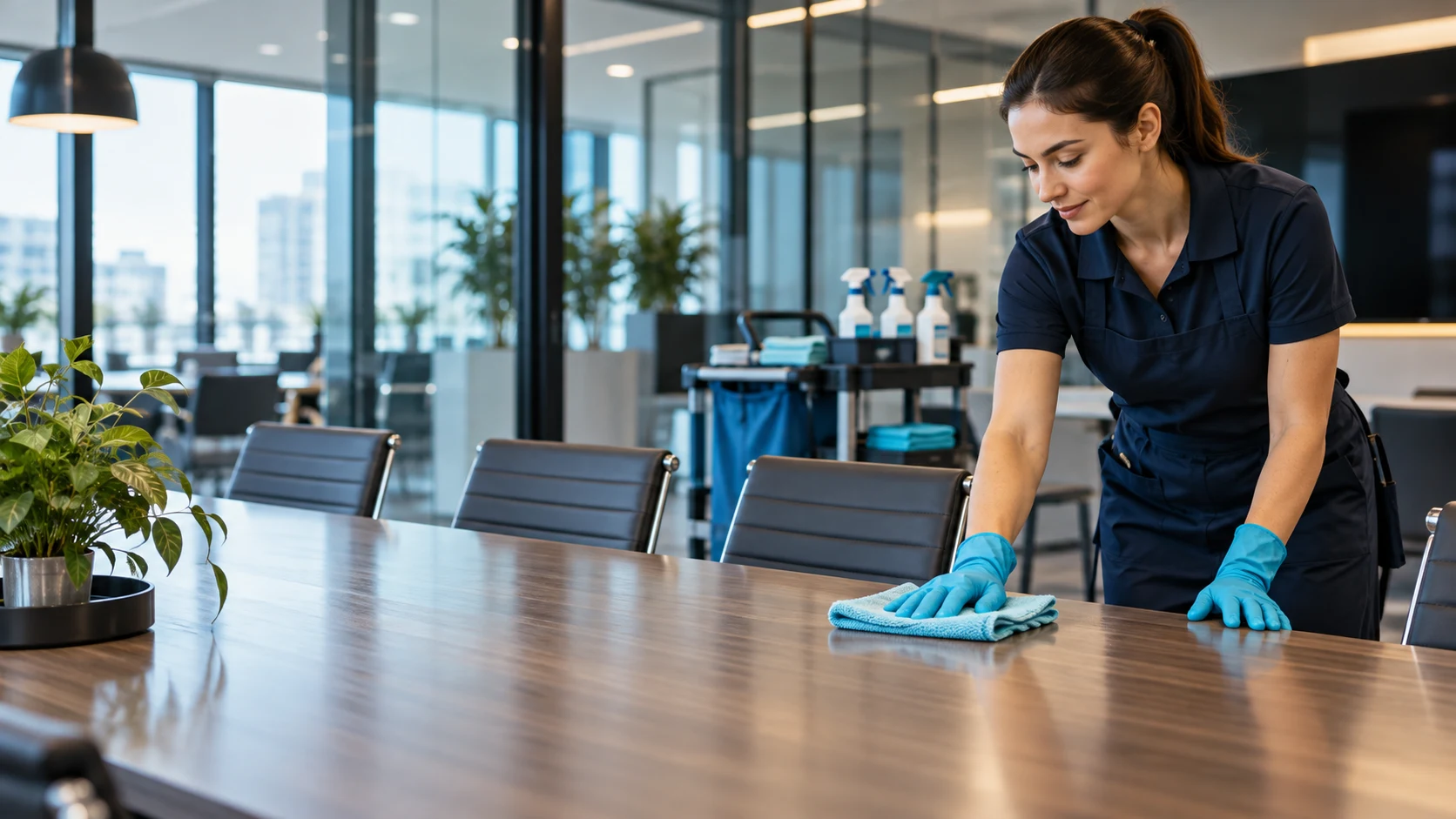
An office cleaning checklist works best when it describes the rooms people actually use. Reception, washrooms and the kitchen rarely need the same attention as a quiet storage room. A good schedule makes those differences clear and gives staff a straightforward way to raise a missed task.
This practical checklist is a starting point for Edmonton office managers. The daily, weekly and monthly intervals below are suggested planning categories, not a universal rule or an agreed GG Sparkle service specification. Adjust them to occupancy, opening hours, floor materials and the condition of your office.
Start with responsibility, not just a task list
Decide which tasks belong to the cleaning provider and which remain with your staff or building manager. That prevents gaps around dishes, consumables, confidential papers and equipment. Identify a contact who can approve changes and receive reports of leaks, damaged fittings or supply shortages.
Use room names that everyone recognises. “Third-floor kitchen” is clearer than “common area”. Note restricted rooms, agreed access arrangements and any surfaces that need a particular manufacturer's care instructions.
Daily or each-visit office cleaning checklist
Reception and entrances
- Check mats for moisture, debris, movement and curled edges.
- Remove visible loose soil using a method suitable for the floor.
- Clean entrance glass and door touchpoints where included in the scope.
- Attend to spills promptly and keep the work area controlled while floors dry.
- Leave the route to reception clear of cleaning equipment.
The entrance deserves its own inspection. CCOHS identifies housekeeping and walking-surface condition as important parts of slip and trip prevention. A caution sign can alert people to work in progress, but it does not remove a wet surface or a trip hazard.
Washrooms
Clean toilets, basins and the agreed touchpoints using appropriate products and separate materials from those used in food areas. Check mirrors, visible marks, waste bins and floors. Replenish soap and paper products only under the agreed supply arrangement, and report leaks or damaged dispensers.
If disinfection is required, make it a defined task. Cleaning and disinfection are different steps; the product's instructions determine its appropriate use. Avoid promises that an ordinary cleaning visit makes a washroom sterile.
Kitchens and break areas
Wipe agreed counters and table surfaces, clean the sink and remove accessible food spills. Empty designated waste containers and leave the floor in a suitable condition. Clarify responsibility for dishes and personal food before the contract starts.
Microwave interiors, fridge interiors and appliance cleaning should be named in the scope. Staff may need notice to remove food or belongings before these tasks can be done properly.
Work areas and meeting rooms
Remove waste from agreed bins, address visible floor soil and clean accessible desk or meeting-table surfaces where authorised. Do not move confidential documents or disturb electronics without permission. The office should define what a “clear desk” means for cleaning access.
Weekly office cleaning checklist
Use weekly work to address the details that daily visits do not always reach. Consider accessible ledges, door frames, floor edges, chair bases, internal glass and marks on partitions. Check beneath accessible furniture where safe to do so, and review the condition of reception mats.
A weekly review is also a useful moment to identify recurring problems. If a kitchen bin repeatedly overflows or an entrance stays wet between visits, the answer may be a different schedule or a building-management action rather than repeating the same checklist.
Monthly and periodic office cleaning tasks
| Area | Suggested review | What to agree first |
|---|---|---|
| Floor edges and corners | Detail accumulated soil | Furniture access and surface method |
| Upholstered seating | Inspect marks and condition | Whether specialist treatment is included |
| Carpets | Review traffic lanes and stains | Any extraction or spot-treatment quotation |
| Internal glass | Review areas beyond routine touch-ups | Height, access and exclusions |
| Kitchens | Review fridge and appliance detail tasks | Emptying, safe access and staff notice |
| High surfaces | Assess dust and access needs | Safe equipment and a separate scope if needed |
A monthly review does not mean every task must be performed monthly. Some offices will need more frequent work; others will need less. Periodic carpet treatment and floor restoration should be planned around actual condition and the manufacturer's recommendations.
How to turn the checklist into a usable service plan
For each task, record the area, frequency, responsible party and expected result. Instead of “clean floors”, specify the rooms and the suitable method. Instead of “restock supplies”, identify whose stock is used and who orders replacements.
Keep the inspection manageable. Look at a representative sample of rooms after a visit, note specific concerns and allow the provider to respond. A short note such as “visible crumbs beneath the third-floor meeting table” is easier to resolve than “the office was not cleaned well”.
Revisit the schedule when occupancy changes. New staff, shared meeting spaces, longer opening hours and winter entrance conditions can make an old plan unsuitable. Changes should be agreed rather than silently added to the cleaner's workload.
Plan your Edmonton office cleaning with GG Sparkle
GG Sparkle's office cleaning page explains the service and enquiry route. Share your layout, usual occupancy, preferred visit times and priority areas so we can discuss a relevant scope. If you are changing providers, your existing checklist can help show what worked and what needs improvement.
Frequently asked questions
Does every office need daily cleaning?
No single frequency fits every office. Busy washrooms, kitchens and entrances may need attention more often than low-use rooms. Build the schedule around actual use and review it when conditions change.
Should cleaners tidy desks before wiping them?
Agree this with the office first. A clear-desk arrangement protects belongings and confidential papers while making cleaning access easier. Cleaners should not be expected to decide which documents can be moved.
Can the same cloth be used in the washroom and kitchen?
Keep materials used in those areas separate to reduce cross-contamination. Ask the provider how tools and cloths are organised and handled between areas.
Is this checklist part of my GG Sparkle quotation?
It is a planning guide. Your quotation should identify the tasks and frequencies actually agreed for your premises.
Sources
Housekeeping inspection guidance: https://www.ccohs.ca/oshanswers/hsprograms/housekeeping/cklstgen.html
Slip and trip prevention: https://www.ccohs.ca/oshanswers/safety_haz/falls.html
Cleaning staff guidance: https://www.ccohs.ca/oshanswers/hsprograms/cleaning_staff.html